Infrared vision delivers safety where it matters most.
Compal ITS applies infrared sensing and AI perception to support early, reliable detection of occluded pedestrians, cyclists, and vulnerable road users in adverse weather conditions and all lighting environments.
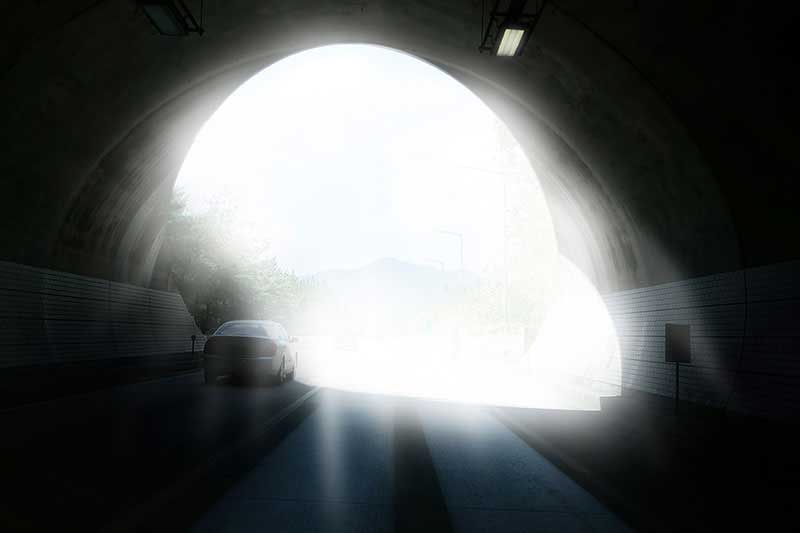
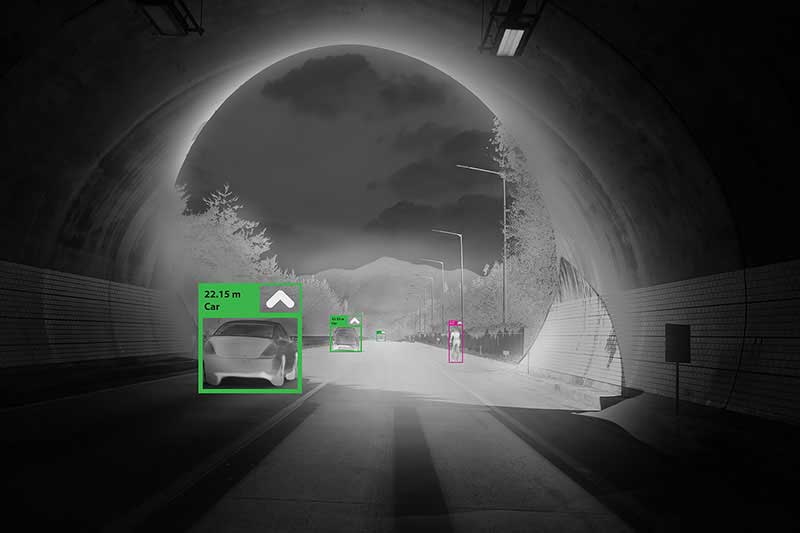
Tunnel To Bright Sunlight
Challenge:
Sudden transition to bright light causes exposure delay in visible cameras, temporarily degrading detection.
Infrared:
Unaffected by light intensity changes, maintaining continuous perception.
Impact:
Provides uninterrupted safety during bright sunlight.
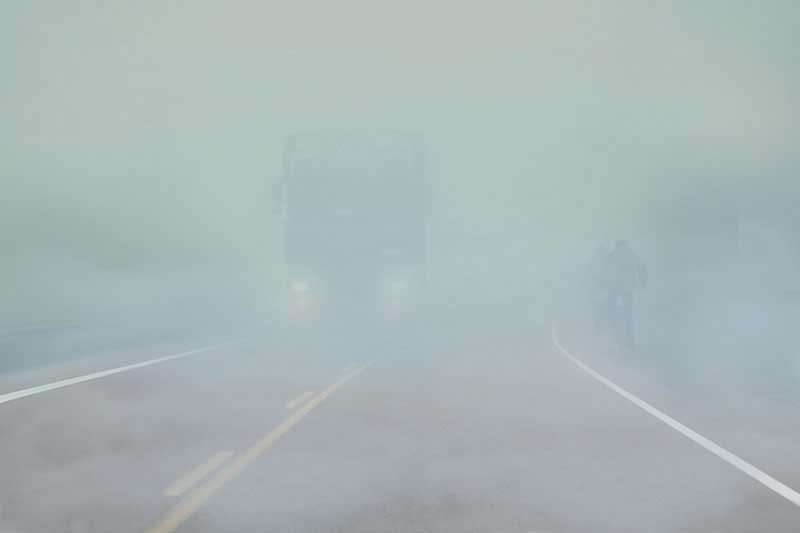
Fog
Challenge:
Fog scatters visible light and reduces LiDAR return accuracy, lowering detection range.
Infrared:
Maintains higher thermal contrast in fog.
Impact:
Enables distant classification with high confidence.
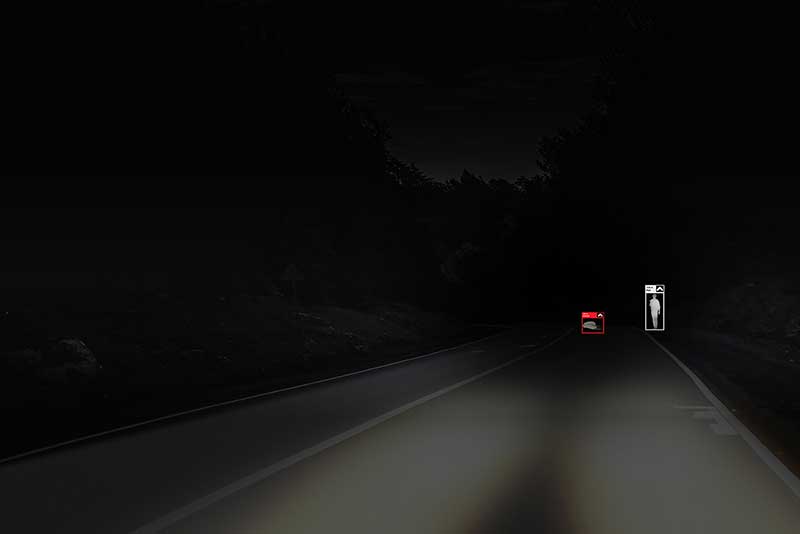
Object in Road
Challenge:
Small, low-profile, or non-reflective objects may be missed by visible-light cameras, especially at night or under glare.
Infrared:
Detects thermal differences or heat-retaining surfaces earlier.
Impact:
Improves awareness of obstacles that may not be immediately visible to conventional systems.
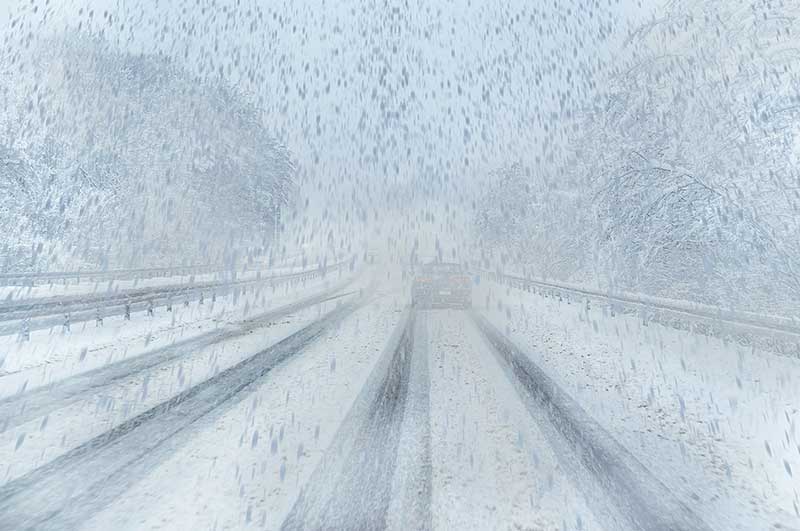
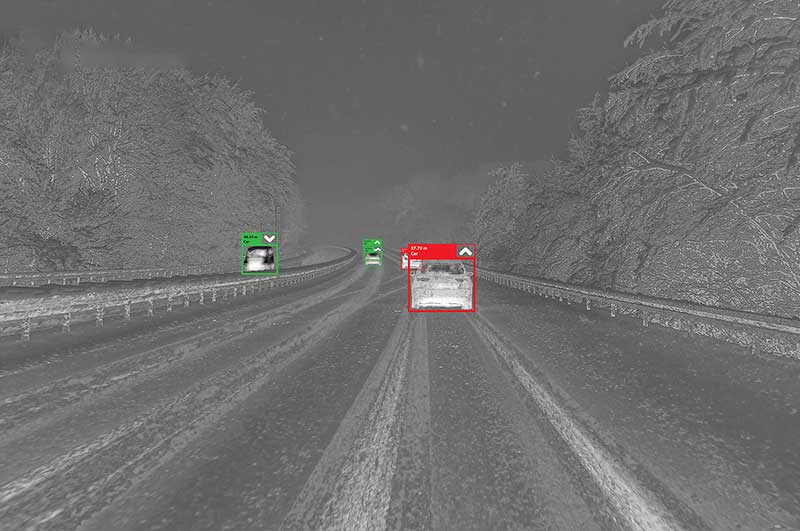
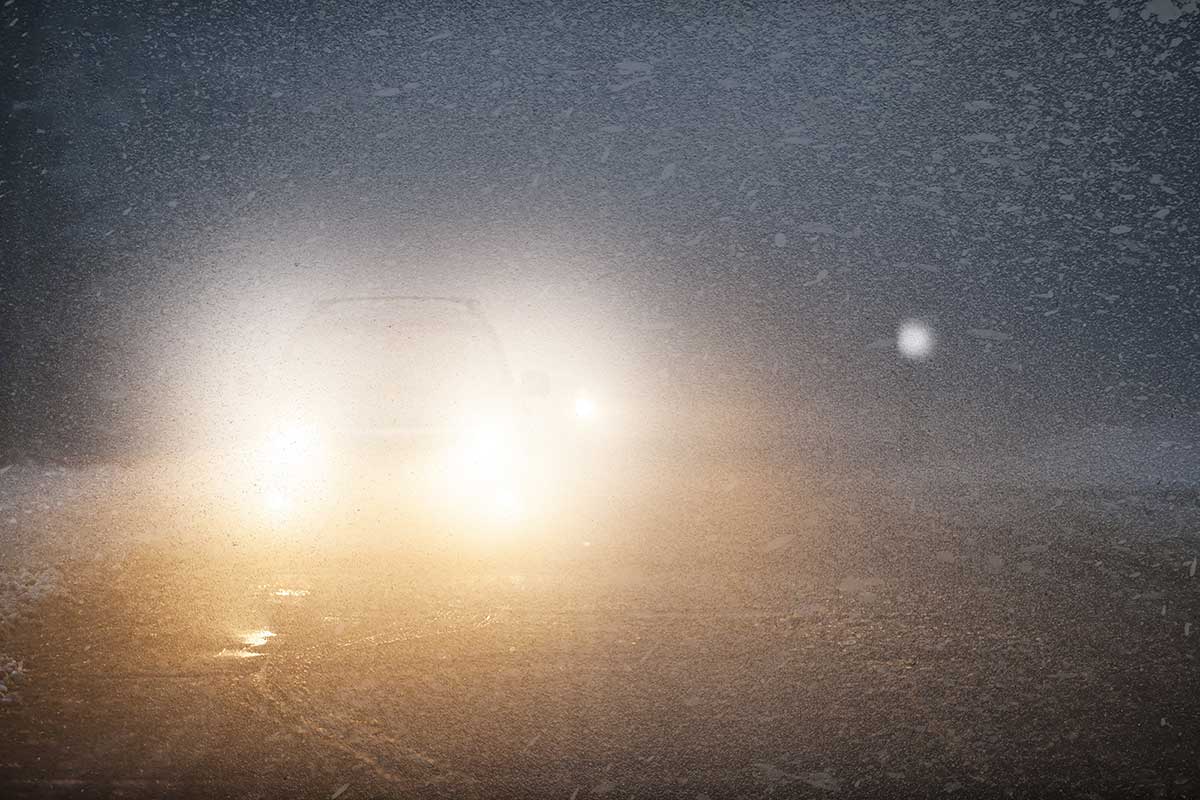
Snow & Rain
Challenge:
Snow and rain reduce visibility and can obscure pedestrian form or roadway edges.
Infrared:
Sees heat differences in snow, rain and low contrast backgrounds.
Impact:
Maintains classification of vehicles, pedestrians, animals, and objects.
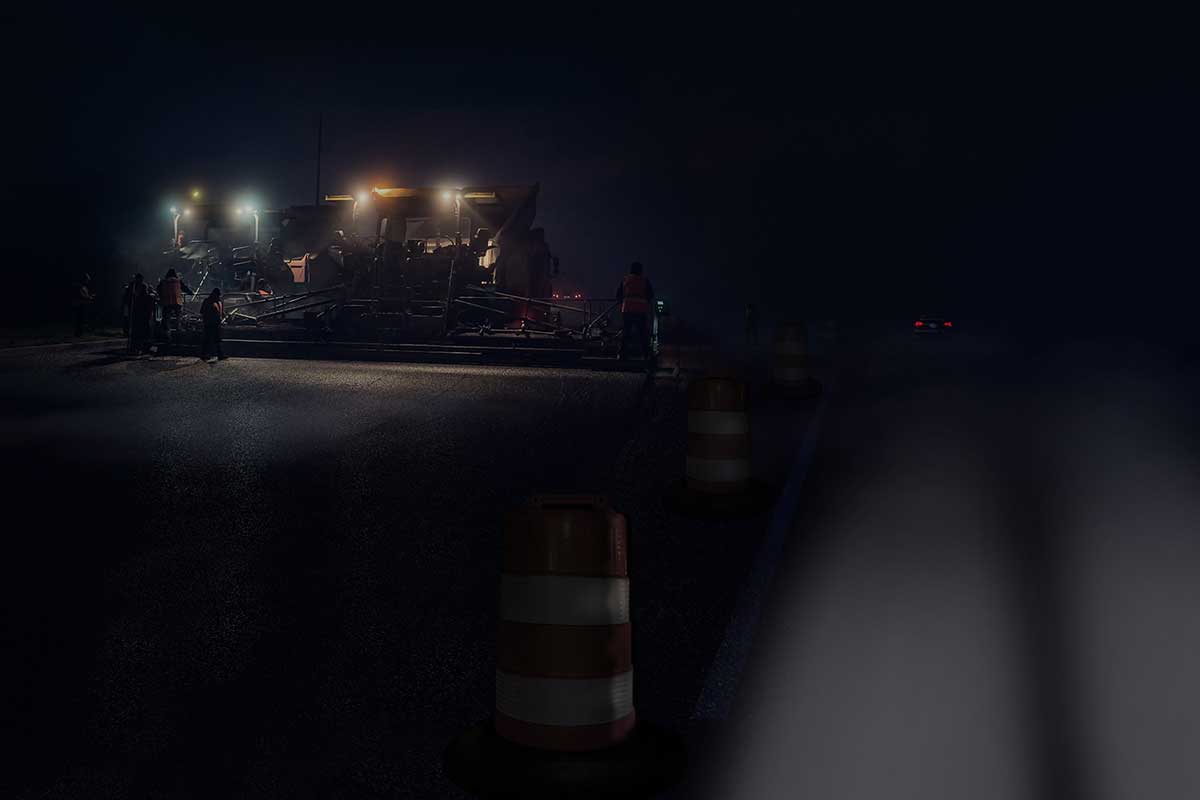
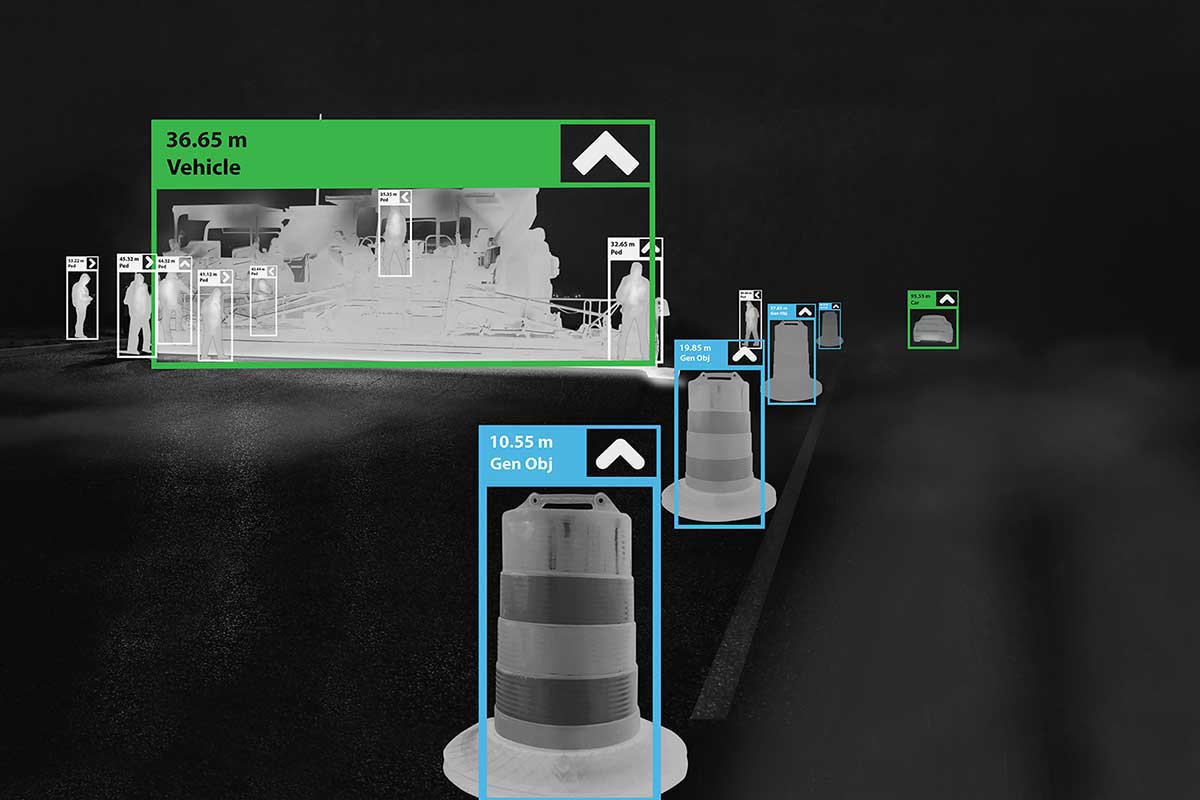
Construction
Challenge:
Temporary layouts, high-visibility clothing under headlamp glare, or workers obstructed can degrade perception accuracy.
Infrared:
Highlights human thermal signature, independent of environmental lighting and glare.
Impact:
Supports earlier detection of workers and vulnerable road users in transitional or poorly lit construction areas.
Dirty Windshield
Challenge:
Dirt, dust, or water droplets reduce contrast and distort vision perception.
Infrared:
Continues tracking based on thermal signature, less dependent on optical clarity.
Our system is developed to meet the requirements of key global safety standards, including:
ISO 26262 – Functional Safety (ASIL-B) for Camera and Software Components
Ensures development processes and system architecture adhere to functional safety requirements.
FMVSS 127 – Automatic Emergency Braking (AEB) for Passenger Vehicles
Introduced by NHTSA in 2024, requiring effective day and nighttime pedestrian AEB.
UN ECE R152 – Advanced Emergency Braking Systems (AEBS)
Covers automatic emergency braking performance and validation requirements.
UN ECE R157 – Automated Lane Keeping Systems (ALKS)
Defines performance expectations for L2/L3 automated lane-keeping functions.