Even the most advanced perception systems struggle when conditions change. Fog lowers contrast. Darkness challenges the ability to see. Headlight glare blinds drivers and vision systems.
The road doesn’t wait for optimal visibility, and neither should vehicle perception.
Our approach looks beyond the visible spectrum. By combining infrared sensing with AI powered classification, we extend awareness into environments where conventional sensors begin to lose confidence, such as pedestrians at dusk, cyclists emerging from fog, or silhouettes hidden in headlamp glare.
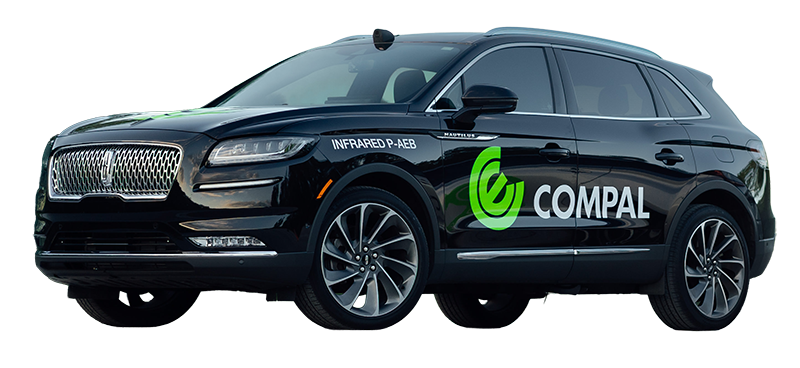
Our CDAT™ perception platform (Classification · Distance · Action · Tracking) combines infrared sensing with AI classification and tracking, enabling vehicles to detect and understand their environment when visibility is compromised.
Rather than relying solely on reflected light, CDAT™ interprets infrared energy, identifying the presence of pedestrians, cyclists, and objects in daytime, nighttime, fog, low contrast or glare conditions.
When detection happens earlier, the system gains time, allowing safety functions to engage more predictively rather than reactively. Infrared extends detection ranges to 300+ meters in low-visibility conditions, enabling ADAS safety systems to intervene sooner, thus providing comfort driving.


quick links